English
 Deutsch
Solution
Patient positioning in surgery with gel pads: which pad goes where
Many positioning problems begin before the patient reaches the table: a pad that does not suit the planned position, an armboard pad hanging half over the edge, a folded sheet underneath. This guide walks through patient positioning in surgery with gel pads, position by position, so that everything is ready before transfer and still sits correctly after every turn.
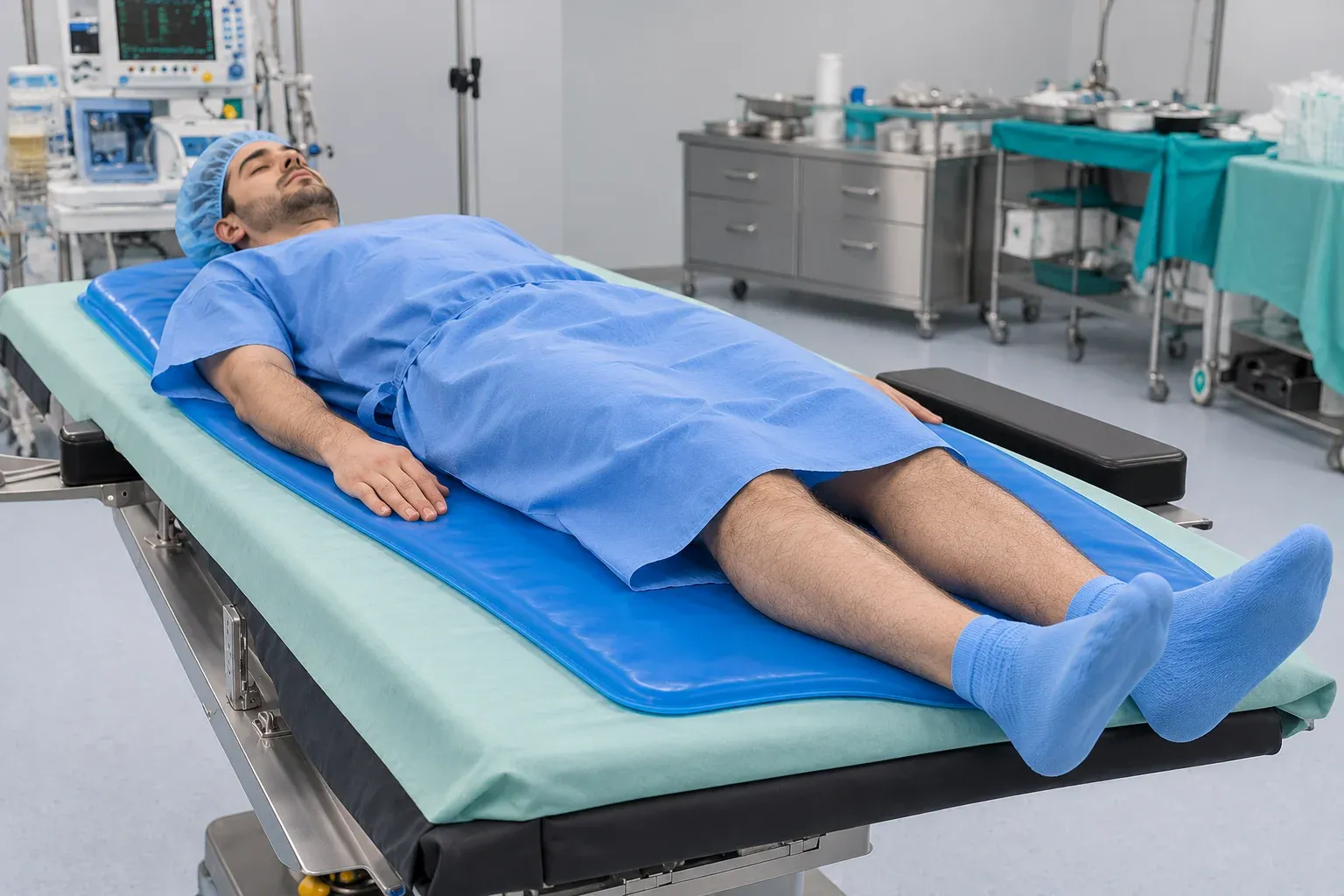
Which gel pad goes where: the short version
For surgical positioning with the Elbnova gel range, each position has its own set of shapes:
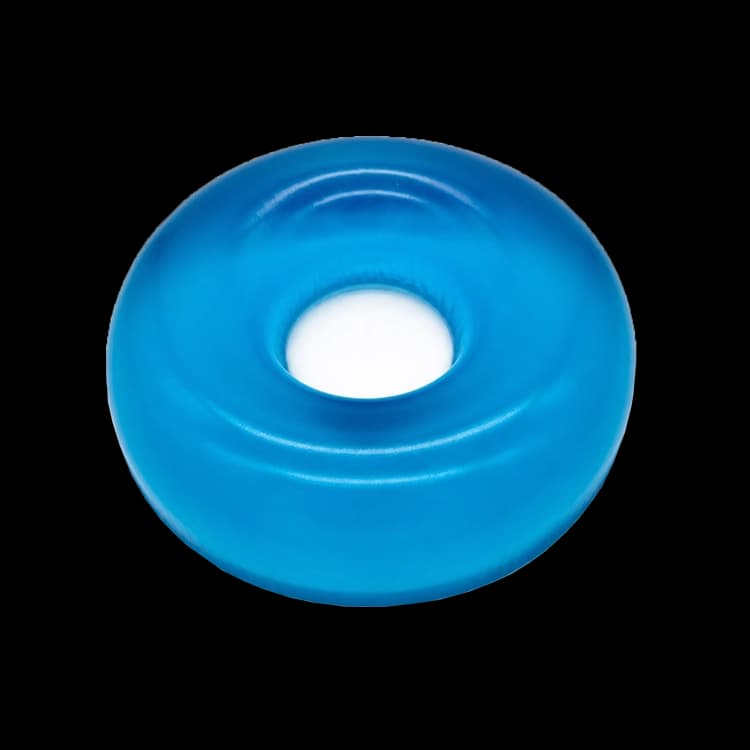
- Supine: closed head ring EG-100 or open head ring EG-130, body pad EG-200 or textured EG-220, armboard pads EG-700 and heel pad EG-600.
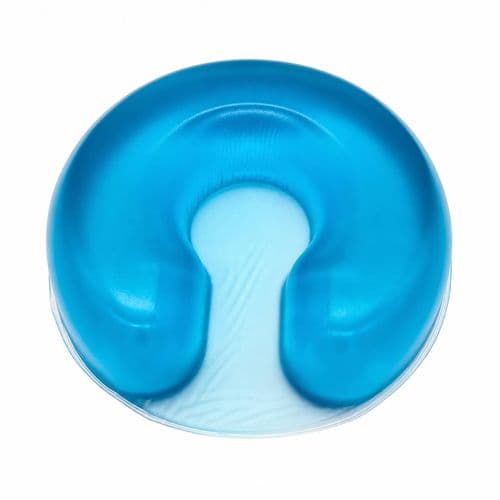
- Lateral: lateral pad EG-400, open head ring EG-130, lateral armboard pad EG-710 and shoulder pad EG-500.
- Prone: prone head support EG-160.
- Beach-chair: shoulder pad EG-500.
- Seated, on clinic and recovery chairs: chair pad EG-300 or textured EG-310.
- Children: paediatric head rings EG-110 (closed) and EG-140 (open).
Patient positioning in surgery starts before the patient arrives
It runs more calmly when the pads are chosen for the planned position, rather than picked from the shelf on the way into the theatre. A short routine helps:
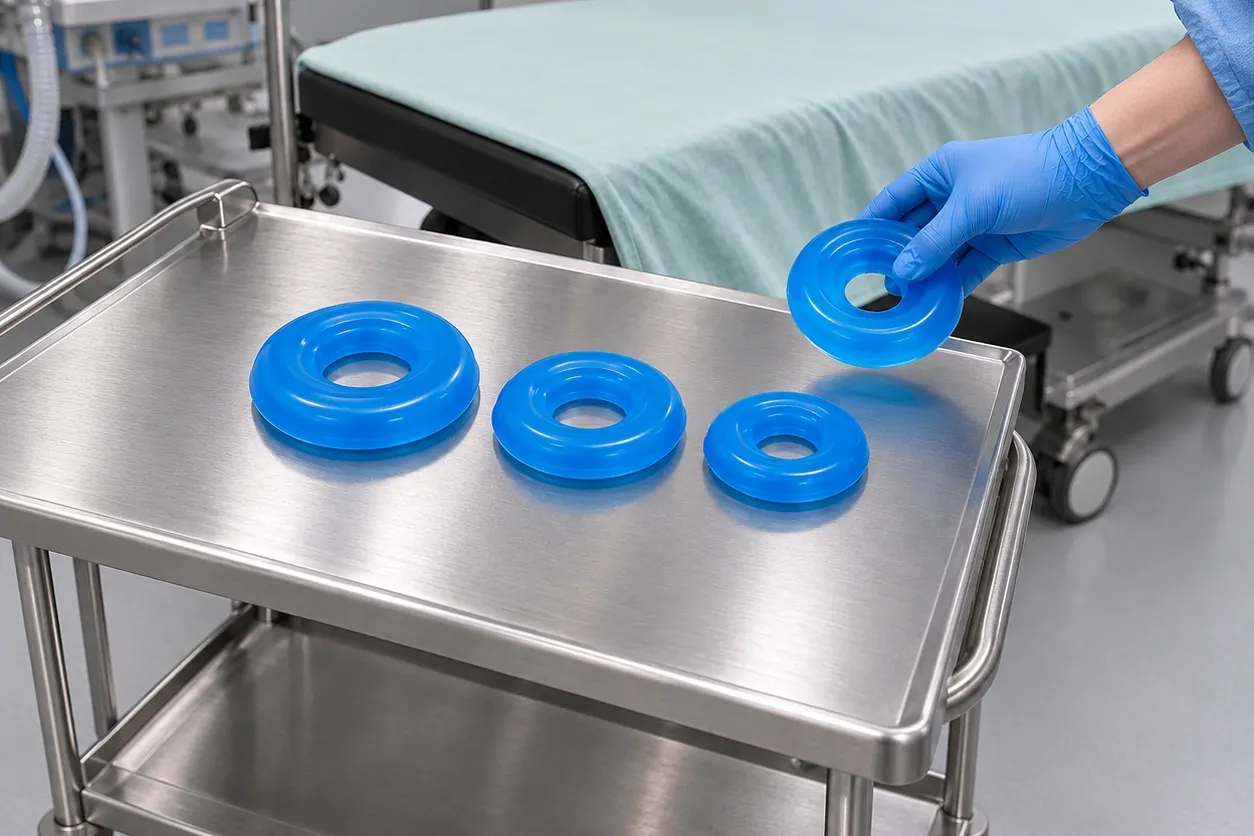
- Check the list. Note the planned position and whether the patient is an adult or a child. This decides the head ring: the adult rings are the closed EG-100 (20 × 4.5 cm) and the open EG-130 (21 × 4.5 cm); the paediatric rings EG-110 and EG-140 each measure 15 × 3.5 cm.
- Lay out every pad before transfer. Nobody should have to fetch a missing piece while colleagues are holding the patient in place.
- Look each pad over. Check the surface of every pad before use. A pad with visible damage stays out of use.
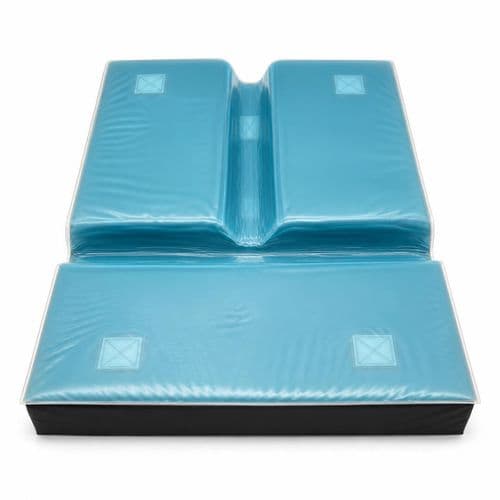
- Lay body pads flat on the operating table. The smooth EG-200 body pad (183 × 50 × 1.3 cm) is made for full-length use; the textured EG-220 (160 × 45 × 1.6 cm) adds grip at the contact surface. Neither should hang over the table edge.
- Keep the linen smooth. Gel spreads load across the area it touches. A fold, a rolled towel or extra layers on top form a ridge that works against exactly that.
All fourteen shapes are described on the gel positioning pads page, and each position below names the model that belongs there.
Supine position for surgery, from head to heel
Supine looks simple, and that is exactly where small placement errors are easy to miss.
- Head: Use the closed ring EG-100 when no particular access around the face is needed. When the face and airway should stay accessible, the open ring EG-130 is the better choice, because its opening keeps that access free. Rest the back of the head centrally in the ring and check that the ring lies flat on its base rather than tipping onto its edge.
- Body: EG-200 for a standard setup, or EG-220 when more grip at the contact surface is wanted.
- Arms: The EG-700 armboard pad (55 × 15 × 1.3 cm) is made in standard armboard dimensions. Lay it flush with the board so that forearm and hand rest fully on the gel and no part of the arm sits on the bare edge.
- Heels: The EG-600 heel pad (20 × 11 × 7 cm) is the smallest three-dimensional pad in the range. Place it so the heel rests on the gel, then check from the foot end that it has not shifted while the legs were straightened.
Lateral position for surgery, pad by pad
In the lateral position the body weight rests on a much smaller area than in supine, so every pad has to sit exactly where it was meant to.
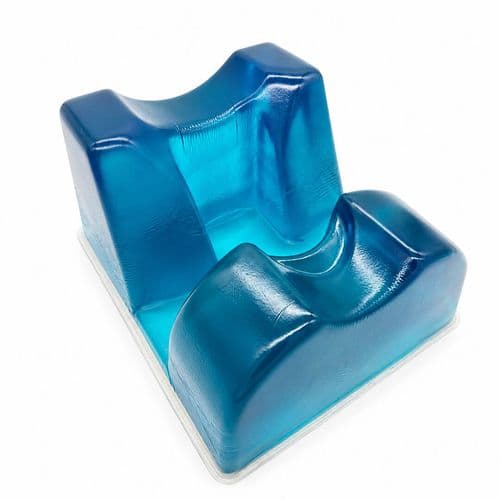
- Trunk: The EG-400 lateral pad (70 × 50 × 12 cm) is designed for lateral decubitus positioning and supports the ribcage and iliac crest region. Place it before turning, where the chest and pelvis of the lower side will come to rest. After turning, check that it is still in that spot and has not been pushed along with the patient.
- Head: Elbnova lists the open head ring EG-130 for both supine and lateral setups. After turning, confirm that the head lies centrally in the ring.
- Arm: For abducted or lateral arm setups, the EG-710 lateral armboard pad (55 × 15 × 6 cm) is the shape intended. At 6 cm it is considerably higher than the flat 1.3 cm EG-700 and gives the forearm a larger contact area.
- Shoulder: The EG-500 shoulder pad (47 × 15 × 12 cm) spreads load over the acromion and deltoid regions and is intended for lateral and beach-chair setups.
Prone positioning in surgery and the check after turning
The EG-160 prone head support (27 × 24 × 17 cm) carries the head in the prone position and spreads load across its contact area. Have it in place at the head end before the turn, so that nobody has to reach for it while the patient is being turned.
After turning, check that the face rests centrally in the support, as intended, and repeat this check every time the head is moved during the case. It also helps to agree on one shared check from head to foot instead of several people correcting single points one after another, because each separate adjustment can shift a pad that was already checked.
Beach-chair and seated positioning
In beach-chair setups, the EG-500 shoulder pad is the model intended for the shoulder area. Check its place again once the back section of the table has been raised, because a change of angle can move a pad that sat correctly a moment earlier.
Seated positioning on clinic chairs and pre- and post-operative chairs has two pads of its own: the smooth EG-300 (42 × 42 × 1.3 cm) and the textured EG-310 (40 × 45 × 1.6 cm), whose textured top adds grip. Both spread load across the seat contact area. Place the pad before the patient sits down, and check it again after the backrest has been adjusted.
Five mistakes that undo a good setup
- The wrong ring size. A paediatric ring under an adult head, or the reverse, means the head does not rest in the ring as intended. The adult and paediatric rings share the same shapes, so check the model number rather than going by look alone.
- Pads hanging over an edge. The part of a pad that hangs over the table or armboard edge carries no load at all.
- Layers between patient and gel. Extra towels and folded sheets add ridges. The gel can only spread load where it is in contact.
- Late corrections without a new check. Moving one body area after the final check can move pads elsewhere too.
- Using one shape for another’s job. Typical examples are a flat armboard pad under an abducted arm that calls for the EG-710, or a folded body pad standing in for the lateral pad. Each shape in the range has a defined purpose.
After the case: cleaning, checking and storing
The pads are wipe-clean and reusable. Clean and disinfect them after each use according to your hospital’s reprocessing procedure and the instructions for use, with only the agents and methods named there. Then look over each pad again before it goes back on the shelf; a pad with visible damage should be taken out of use and reported.
Storage conditions are also set out in the instructions for use. One small organisational step saves time at the next setup: keep the pads for each position together as a set, for example the head ring, armboard pads and heel pad for supine.
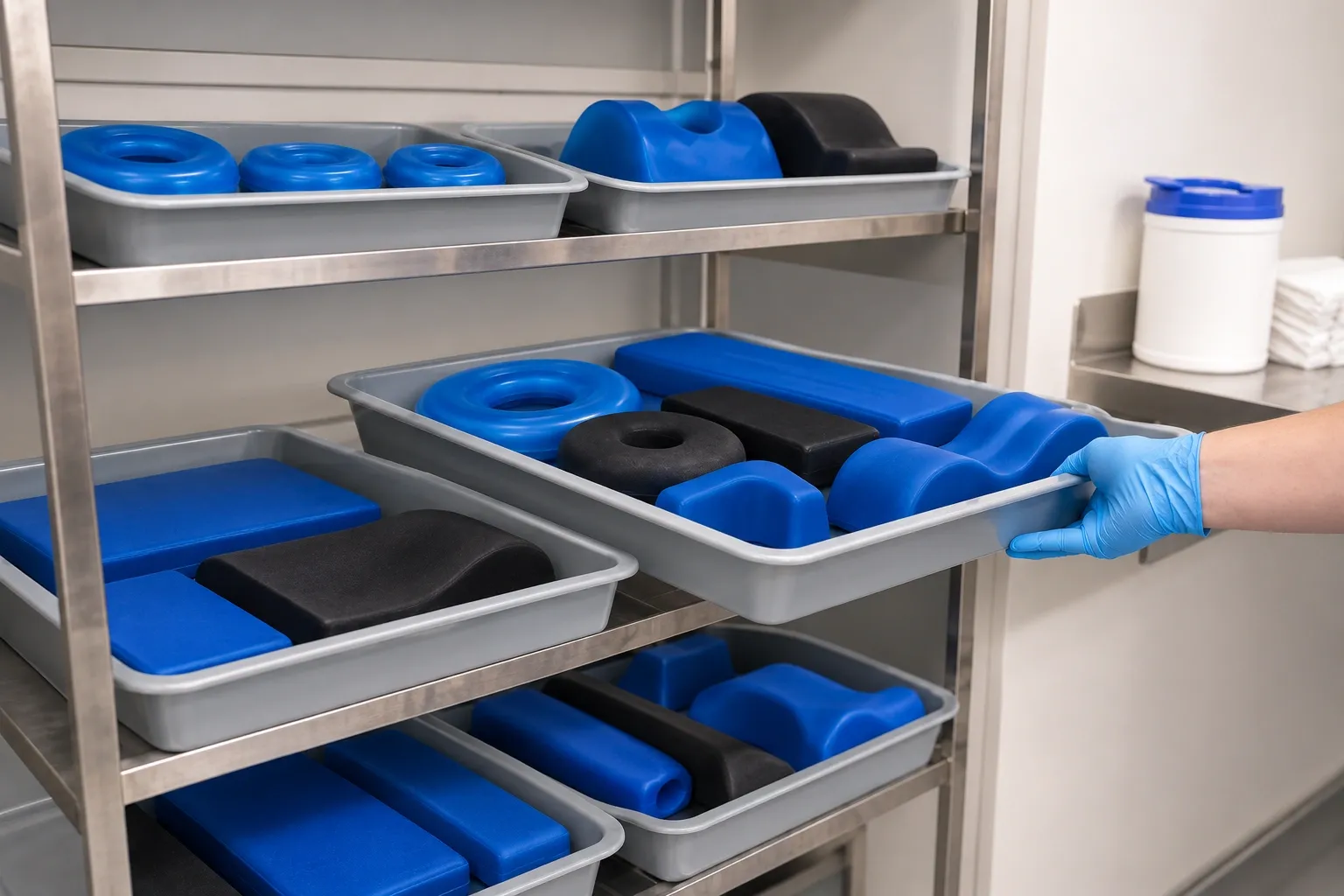
Building position sets for your theatre
Dimensions and model numbers for all fourteen pads are listed in the product catalog, and our overview of gel positioning pads in clinical use explains where they fit in everyday care. If you are putting together position sets for your theatre and would like to talk them through, we’d be happy to hear from you via our contact page. More articles are collected under Solutions.